Exploring Alberta Along the Trans Canada

17 Jun

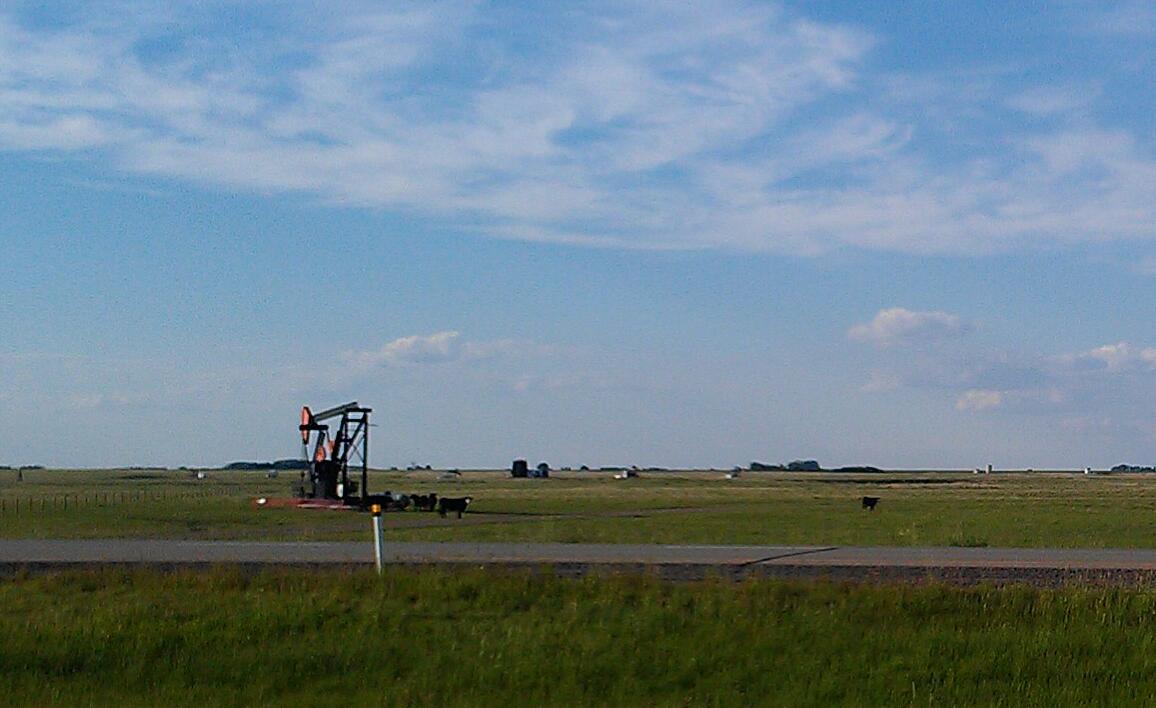
On our way through the flatlands of Alberta, we caught up with Frank, a lone cyclist with his belongings stashed in four panniers on an extended rear rack. Frank is from Salmon Arm, BC, but cycles east every summer for work, living on the cheap out of a tent. This time he was cycling to Medicine Hat. How’s that for a work commute?!

We stopped in Bassano for lunch at a place called Bakafe (a bakery and a café, see?). Rose, the owner, was ultra nice to us and we talked for a while. At her café, Rose serves fresh, homemade products with no preservatives whenever possible. And it’s delicious!

Rose was surprised that we had taken the detour into the town. In the 1980s, before the Trans-Canada was re-routed 2km north, Bassano was directly on the highway. Back then, a lot more visitors would come through; nowadays business is slow, except on rodeo days. Rose talked about the challenges of keeping the younger crowd busy in such a small, remote town: some are very active in the community, but others turn to drinking for entertainment. The Bakafe is one of the only places in town that does not serve alcohol.
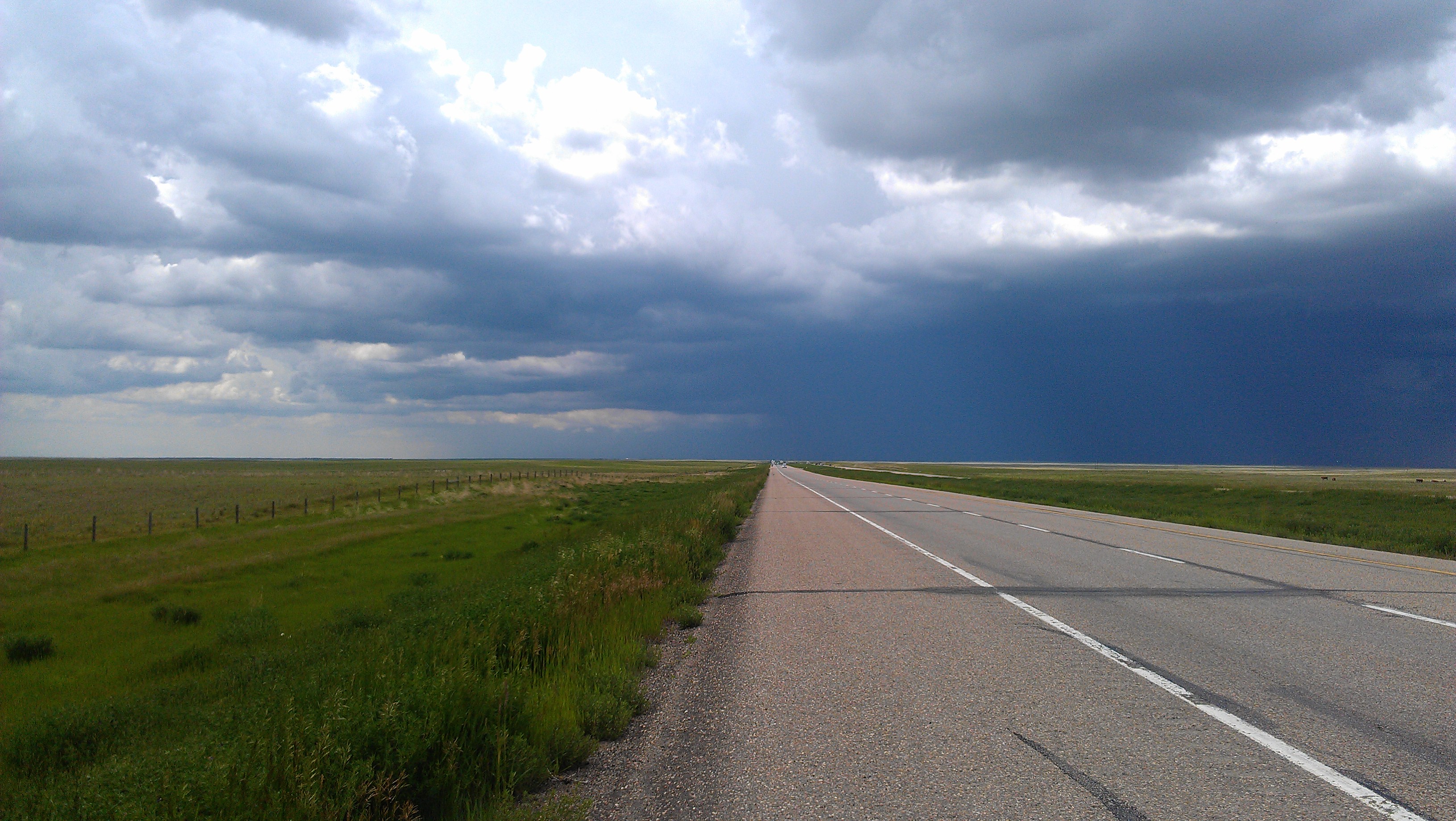
Heading further east the next day we noticed a darker patch of sky behind us. We hoped it would go away, but it kept getting closer and making thundery noises. In this sparsely-populated region with towns at least 30km apart, and considering half the towns don’t even have a café, we were very lucky. We reached Suffield only 10 minutes before the rain started, and waited out the worst of the storm in the town’s only diner, adjacent to the town’s only gas station. Here we ran into two cool crazy guys from Quebec: a rollerblader and a longboarder, making their way east on their own wheels and by hitch-hiking.

Once the storm quieted down a bit, we set out for Medicine Hat, where we had a couchsurf set up.

The Couchsurfing scene in Medicine Hat is awesome! We were slightly overwhelmed by the amazing response to our surfing requests. Nicole, the host who won us over, told us that she really has to be on the ball to snatch couchsurfers coming through town. There is a fierce competition between the hosts in town to get surfers on their couches.

We Have a Beef with our “Rest” Days

14 Jun

We arrived in Calgary by following Google Maps cycling directions (which are in beta, the app warned us). The directions took us on a 15-km gravelly road through First Nations land. Despite the huge NO TRESPASSING sign, nobody kicked us out although Maria was very worried.

Incidentally, Maria’s tire had gone flat again, and we had to stop a few more times to inflate it. As we later found out, the culprit was the other half of the staple-like thing that caused the first flat.

After that, Google took us onto a network of amazing off-street bike trails extending along the shores of the Bow and Elbow rivers. The paths are divided into two bike lanes (one in each direction) and are in perfect shape with not even one crack in the pavement. We heard these paths get the snow cleared off in the winter and many people continue to ride year-round. Go Calgary!

(Sorry, no time for editing. Just wanted to show you the awesomeness of Calgary bike paths. Fast forward when you get bored.)

In general, Calgary has a great bike route network with on- and off-street cycle paths covering much of the city. From what we saw, lots of people were on bikes, with many velo-connoisseurs on high-end road and racing speed machines.

It’s thunderstorm season, and although we were originally planning to stay in Calgary for only a couple of days, we decided to take a few extra days to avoid foul weather. So our dear Calgary friend, Katia, took us on a CONS (Calgary Outdoor NutS) trip to Dewar Creek Hot Springs (yes, back in BC). After a series of spectacular failures we finally ended up in some hot springs, although we had to settle for Fairmont, a resort-style hot spring.

Spectacular failure #3: unexpectedly high snow cover on trail.

Once a hot spring gets commercialized like that I don’t know how “natural” you can call it, for me it feels as natural as bottled water. The energy required to run the resort is probably an order of magnitude greater than the benefit of using naturally heated hot spring water. Nonetheless, Fairmont is doing their best and they did provide us with some much needed relaxation, so no complaints there.

We also talked to the trip organizer, Trevor, about his perspective on sustainability. He brought up the issue of diet. “If everybody ate like I do right now,” Trevor admits, “there wouldn’t be enough food in the world.” He doesn’t eat most grains for health reasons, and therefore ends up eating a lot of meat. Since Trevor grew up on a cattle farm in Saskatchewan, he certainly knows his steak, and how resource-intensive it is to produce. Even taking the eating local philosophy into account and the abundance of cows in Alberta, meat intensive diet is not sustainable.

Alberta Blows Us Away

8 Jun

We reached the Wild Rose Country! Yay! (Technically they are still part of Canada.)

In the morning, we were well-rested and the sun was out. Everything seemed great, and we were cycling at a solid pace. Turning onto Highway 22 we saw this sign, and poked fun at it by taking silly pictures.

Little did we know what the weather gods had in store for us. Also, Maria’s rear tire was partially deflated and we had to pump it up. We assumed that was the end of it.

At first we were confronted with massive side- and headwind. Our pace slowed noticeably. For the first time during our trip, we had to cycle close together such that the person in front would block the wind for the person in the back. By this point we realized Maria’s back tire had a slow leak, as we had to pump it up again. Our ambitions of getting to Black Diamond (a 140km day) crumbled.

Around 5pm the rain started up. By this point in the trip we knew a rain-bringing cloud when we saw one, so we quickly put on our rain gear – and not a minute too soon. But unlike previous downpours, this one just kept going and going. In addition, we started seeing some lightning and hearing thunder, although it was still far away.

The particular stretch of highway we were cycling along is interesting because from the turn-off onto it and until Black Diamond, a 130-km stretch, there is literally nothing. No gas stations, no corner stores, no campgrounds: just fields with grazing cows. We knew this in advance, too, because there was a sign. So we were slowly making peace with the idea that we would camp on the grass beside the highway.

Our spirits were low when we had to stop a third time to inflate Maria’s tire. It was already 8pm, and our waterproof-breathable jackets were soaking through. We got going again, but the lightning was getting closer (we were counting the time between the lightning and thunder). After cycling another ten minutes we both had the idea to just stop for the night already.

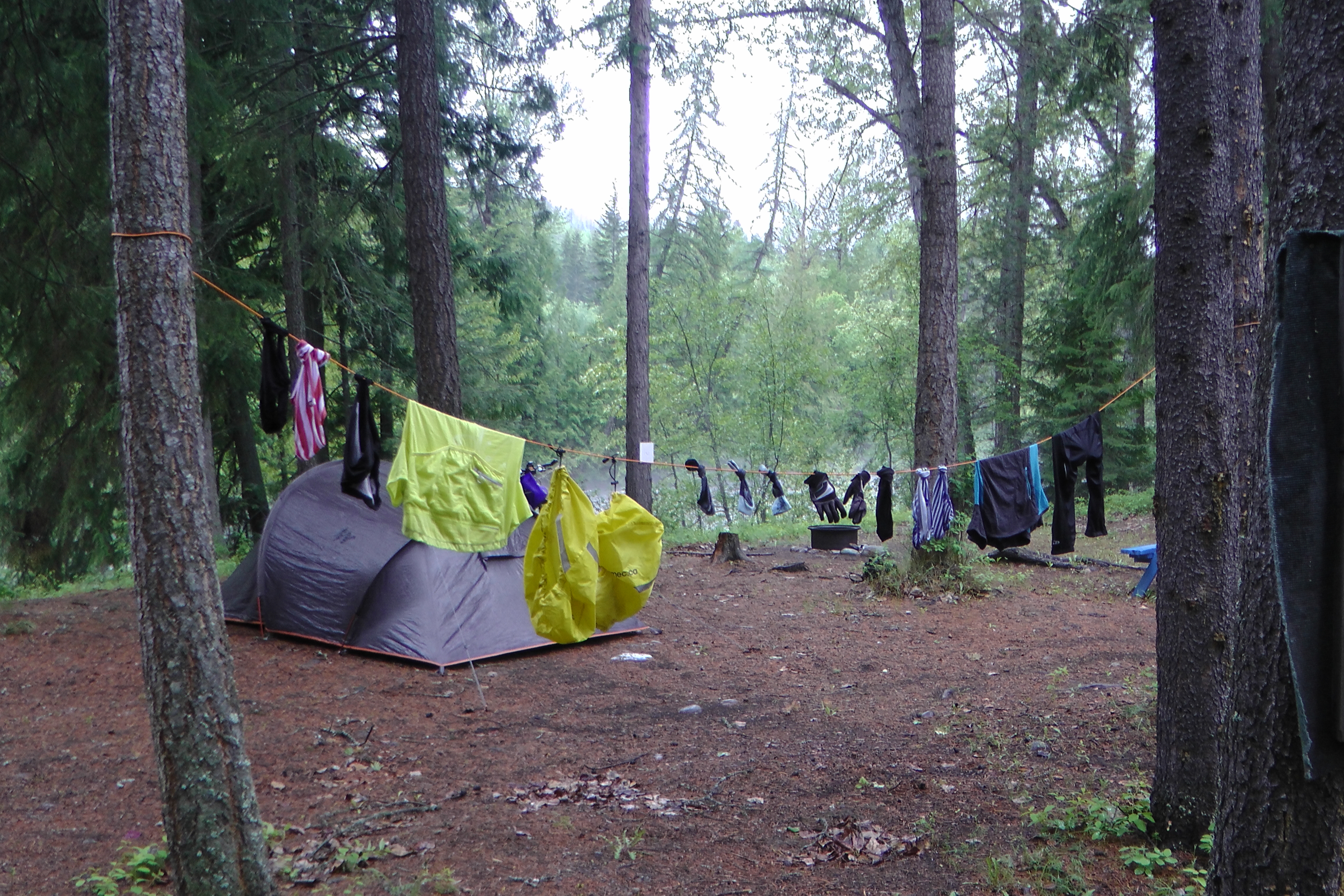
Within a few minutes we were lucky enough to discover a bridge. So we did the hobo thing, and set up camp right there.

In the morning, we finally cobbled together enough enthusiasm to change the tube in Maria’s tire. It was still cold and wet, though it was not thundering anymore.


Grudgingly we started out, in full rain gear, preparing ourselves for a half-day of cycling followed by warming up in the nearest B&B. But within an hour the sun caught up with us!

We stopped at Bar U Ranch for breakfast/lunch and ate the most delicious, largest brunch in the world: soup, burgers, chicken wings, and dessert. The attendants there told us there had been 2 tornadoes that touched down near Medicine Hat the day before.

Mining on the Continental Divide

7 Jun

Passing through the Rockies, I thought of the waterways we followed on our way: the Fraser, the Similkameen, the Kettle, the Kootenay, Boundary Creek, the Moyie, the Kootenay again… Highways often follow rivers, probably because the water has sought out the path of least resistance. Now, we’ve reached the mountain range where all these rivers begin.

Our last night in BC was in Fernie: outdoor activity hub and mining town. We couchsurfed with Lia, who is from Toronto and is doing an internship at Teck, a mining company. This is no coincidence: Fernie is in Coal Valley after all.

Moving towards sustainability for a mining operation is a vast topic. Lia mentioned that mining companies are talking about sustainable business practices more and more. Yes, there are many concerns with mining; but people want the materials it provides. So in reality, a large part of the issue is the increasing consumer demand.

As a chemical engineer, Lia is well informed about the health risks from various substances used in mining processes. Exposure to these substances on the job is something she’d like to avoid as much as possible. Diamond mining, she said, has a much cleaner process than coal mining; she says she’d prefer to work in a diamond mine in the long term.

A co-worker pointed out to her that diamond mining leads to human rights issues — “blood diamonds.” Lia argues that since carcinogens are used in coal production, downstream it also costs lives. For example, the coal is sold to factories in China that spew the pollution from burning the coal into a city’s air and water without any filter system, increasing risk of cancer for the citizens.

But Fernie is not just a mining town!

Hosmer Tavern

Ah, Fernie culture.

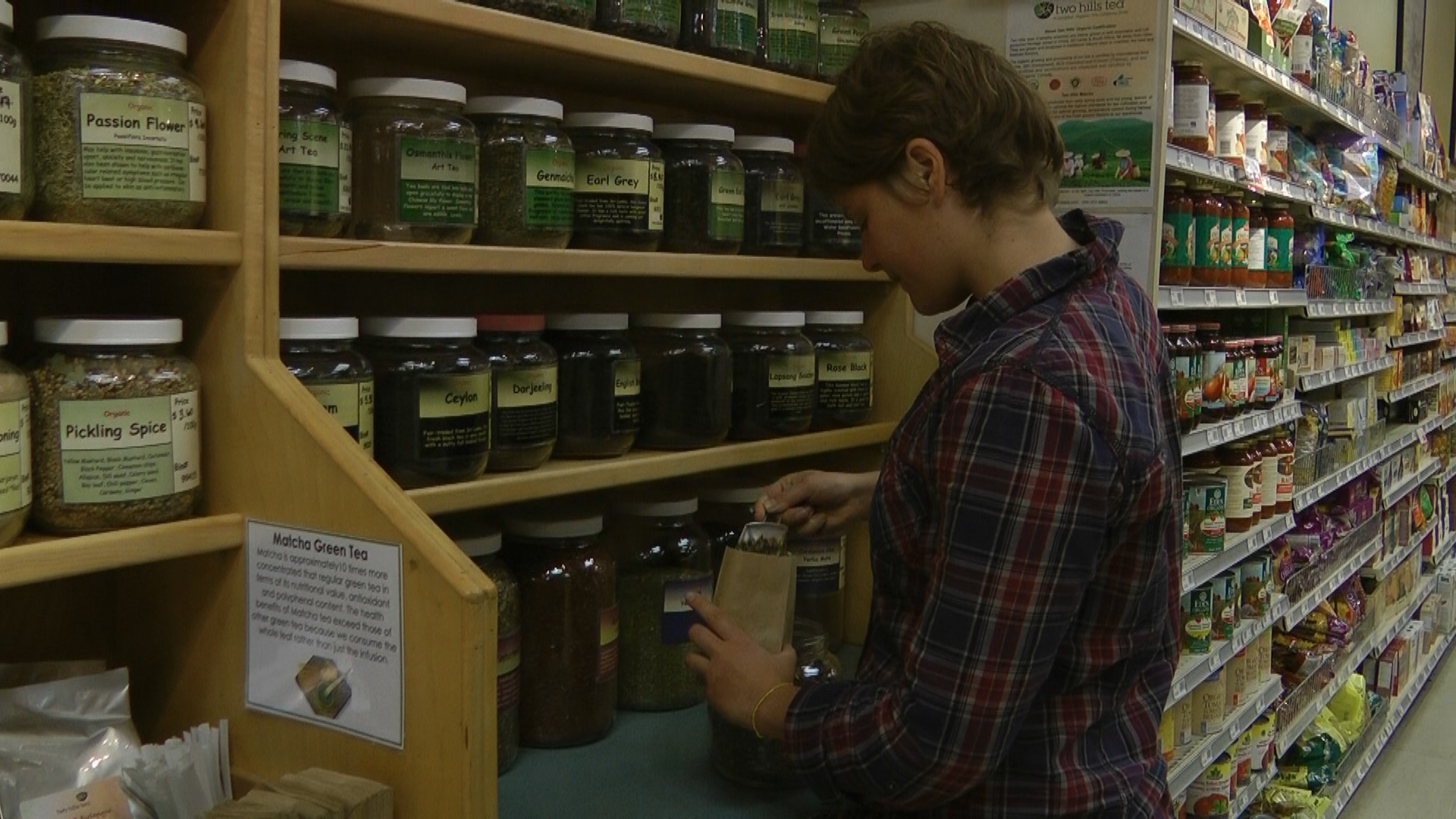
Lia, accustomed to city life, has sought out refined things like Fernie’s fancy cheese store and the best looseleaf tea in town. She also told us about Fernie Arts Co-op. The members are local artists, pooling resources to rent retail space and taking turns volunteering to work in the shop. We went to see the art and found some really amazing stuff. I don’t mean to diss culture in Vancouver, but the VAG should take a hint.

Sparwood – the last town before the BC-Alberta border, Lia said, had nothing to offer. However, we found this:

It’s the world’s biggest truck! If you stand six grizzly bears on each other’s shoulders they will equal its height! Come one, come all to Sparwood, to experience the mining magic.

Change is in the Air

3 Jun

On day 14, we awoke to the pitter-patter of rain on the tent, and I thought:

…well, that was useless.

After that it turned sunny for a while, and we pleasantly pedaled in the sunshine, but around 7pm it suddently started pouring. Within 10 minutes it went from sunshine to heavy rain to hail. Then the lightning and thunder rolled in. Luckily a rest area was conveniently around the bend where we waited out the storm. And in this part of town (or country), you don’t need to wait very long for the weather to change.

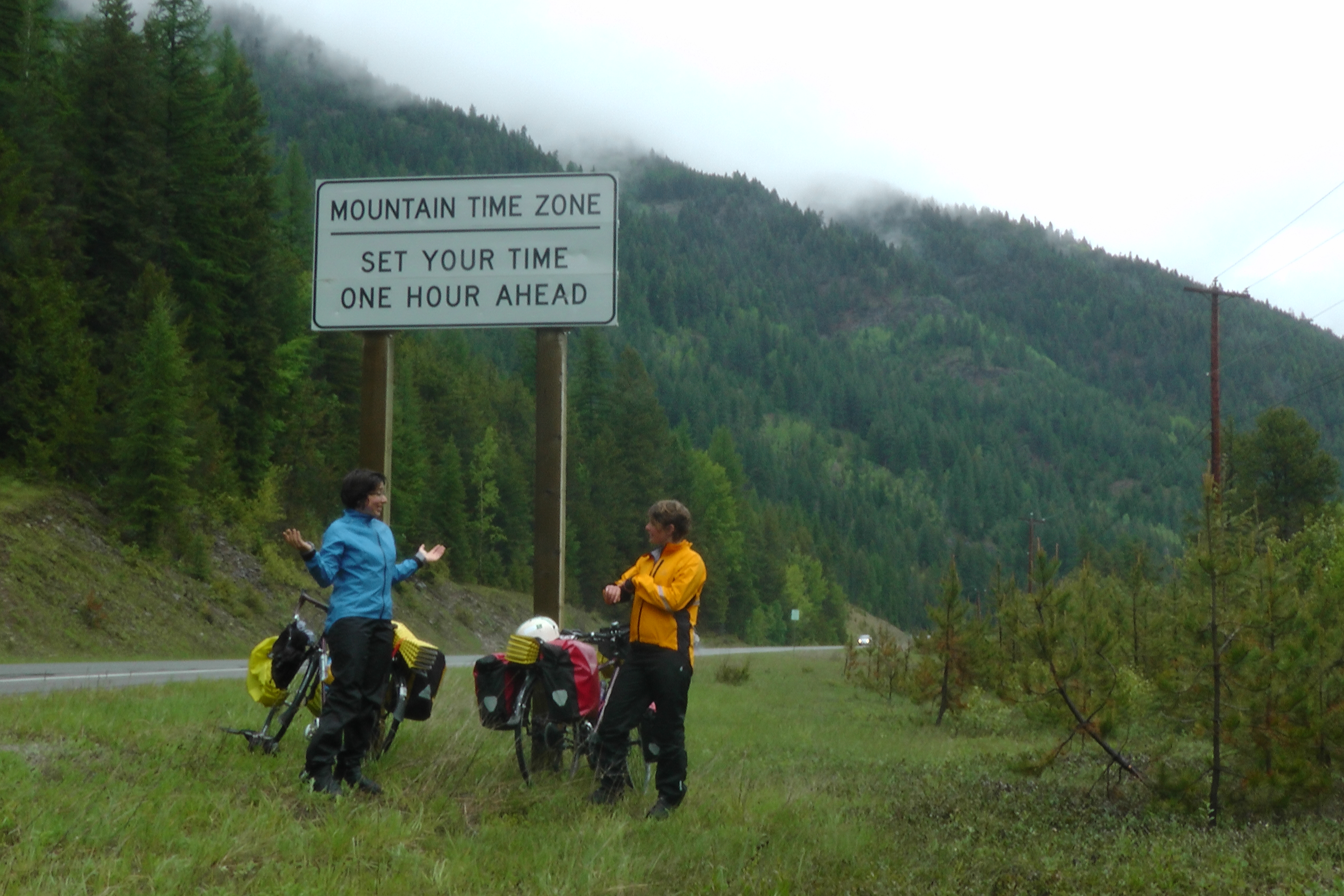
Speaking of time, we actually crossed into the mountain time zone:

Also we passed our millennium mark – 1000km. We deal in metric here, not like these people:

Peace, Love, and Co-ops

1 Jun

Bonanza! Day 10 was hard. After cycling up a 1535m pass, we found out the campground where we were planning to stay at was closed because of a problem grizzly bear. So we put in an extra 25km (okay, downhill) averaging 45km/h. Did you know? Grizzlies can actually run at speeds exceeding 50km/h!

On Day 11 we took it easy and cycled 50km to Nelson. By that point our bikes had survived 800+km, including 100+km on the KVR trail, so we took them to the bike shop. The bikes got a thorough inspection by Blair and we were warmly welcomed with locally brewed beer. The people at the shop were interested to hear about our project. Mark, a mechanic at the shop, had a sustainability story to share: since he moved to Nelson 4 years ago, he’s worked on reviving the three overgrown fruit trees in his yard. Last year was the first year they gave fruit. This year, his goal is to be self-sufficient and grow all his own fruits and greens. Way to go!

We were hosted by Anya’s extended MSLS family: Alison, Steven, and Elliot. We talked about Nelson’s focus on community and local economy.The municipality of Nelson, Alison told us, has a strict no billboard policy, which is why you can’t even find the Walmart in town. As for the McDonalds, there isn’t one, because the town didn’t allow one to be built. With that kind of support for local commerce from the municipality, it’s no surprise that Nelson is home to so many successful co-ops and small businesses.

As mentioned in our previous post, Nancy of Grand Forks told us about the Kootenay Food Co-op and gave us contact information. We were able to arrange a conversation with Jocelyn, who is currently the Co-op’s marketing manager.

The Co-op is amazing. It has been around for 37 years and has more than 10,000 members (population of Nelson – 20,000). They have everything in bulk – grains, tea, herbs, oil, shampoo, detergent, and more. A buzzing community hub, the Co-op hosts overwhelmingly popular cooking classes that sell out within 3 days of being announced. They also promote local production by mentoring, supporting, and encouraging local residents to start up their own food businesses.

Jocelyn is very knowledgeable and shared a lot of great ideas with us — so many that we can’t possibly cover them all in this entry. We recorded the conversation on video, so watch our movie when it comes out. For now, here’s a sample.

One thing we talked about are the difficulties of running a small, local farm. Large corporations lobby to lower the organic certification standards so that they are able to carry “organic” products, lowering the cost at the expense of food quality. In contrast, the food co-op preferentially purchases higher-quality, local food, and pays the farmers a fair price, while bringing affordable and top-notch produce to the co-op members. To actually be able to give a fair price to both farmer and consumer is an immense challenge that the co-op tackles daily.

Grand Forks, Spoons, and Knives

30 May

All right, get ready, make sure you don’t read this on an empty stomach, lots of food talk coming up.

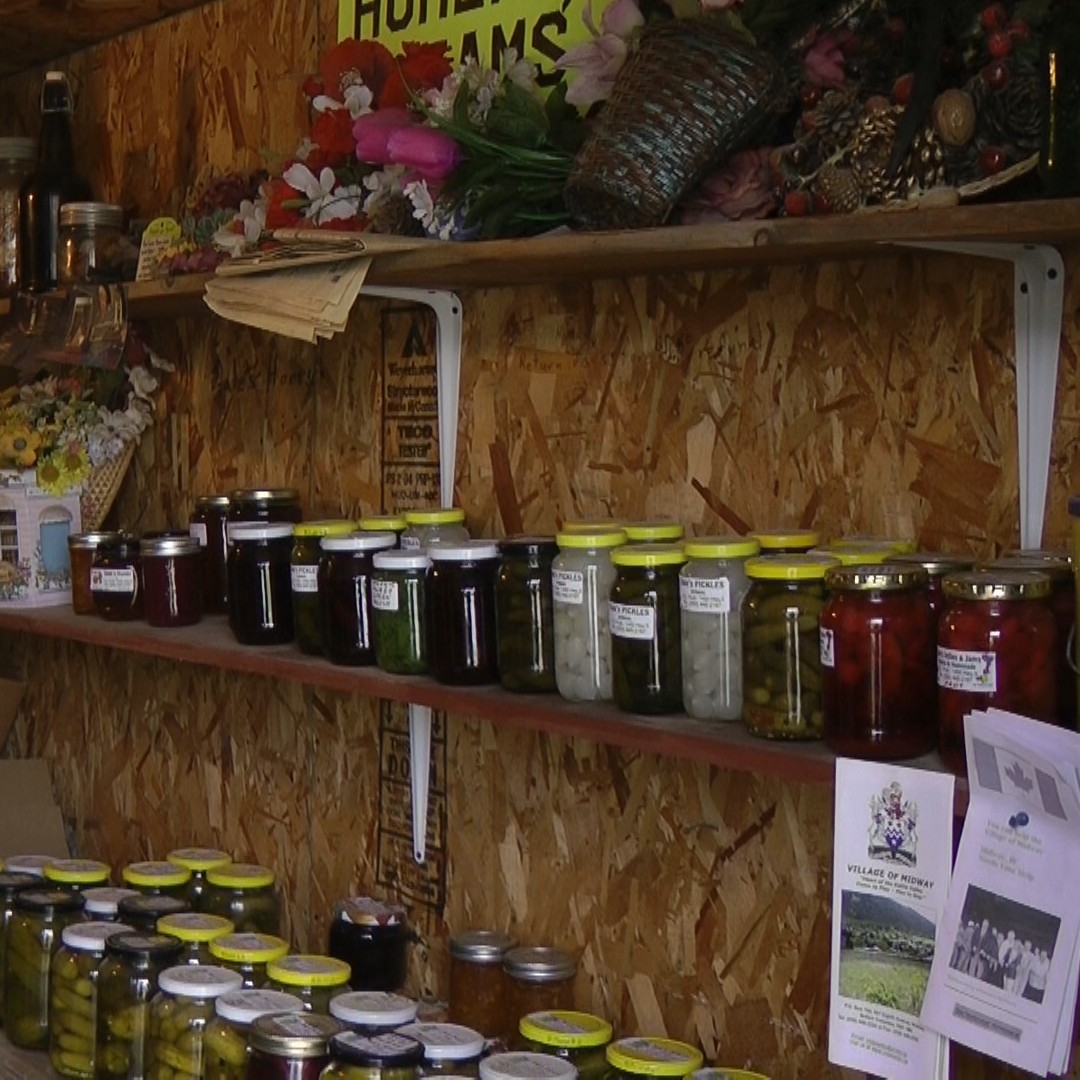
In Rock Creek we met Dwight, who is cycling to Ontario. We kept running into him along the way, like at this little shack – OK Fruit and Dale’s Honey shop:

We bought delicious honey, orange honey marmalade, and chokecherry jam for very cheap. Dale was nowhere to be seen so after searching for a money box for a while, we finally deposited the money in a little ceramic container. Hope you find it, Dale!

Dwight was really excited to see the little shop. He told us how years ago, he was a vegan and animal rights activist, but since moving to the Cowichan on Vancouver Island he has given it up. There, he had a choice: to buy processed, GMO soy products from overseas, or to go across the street and buy meat, dairy, or fruit and vegetables from his neighbours. He now prefers to buy from people he knows, but that means, he’s not vegan and not even vegetarian.

In Grand Forks we couchsurfed with Nancy, who works at the Kettle Valley Food Co-op. The co-op is just starting up: after two years they have 160 members (of 4000 people living in Grand Forks), and Nancy is their first paid employee. The co-op links the farmer directly to the consumer, promoting the local economy and providing its members with the opportunity to buy locally grown and produced food.

Nancy not only works for the co-op, but also fully supports it. Her fridge is packed with amazingly tasty local products (aren’t we the luckiest guests?!). She is also very conscious about buying organic, which is much easier when you know your farmers as many of them grow organic foods and veggies, but are not certified because the certification is quite expensive.

The co-op is still establishing itself: they are working to get more members and vendors. As the co-op grows, Nancy believes it will encourage local farmers to grow crops year-round, and to develop a market for unique local products such as Haskap berries. Grand Forks, says Nancy, is a fertile area with a lot of potential; historically it’s been much more productive. The co-op will help to bring that back.

Escape from the KVR Trail

29 May

Since last summer I’ve had this idea that it would be so awesome to cycle the Kettle Valley Railway (KVR) trail. The trip never got organized but now that we were going through the Okanagan on bicycles, I was going to make sure we didn’t miss it. So in Naramata we got on the KVR headed for the renowned Myra Canyon. It sounded great: a steady 2% grade uphill, off the highway, with trestles, tunnels, and beautiful scenery.

Not gonna lie — it was worth the trouble! But it was slow going: we reached Chute Lake (~30km from the start) in five hours. Chute Lake Resort serves food, and we were probably its best customers that day: we ate a burger and a giant slice of apple pie each. The people on dirt bikes hadn’t worked up an appetite at all: they just came in for beers.

The KVR is really rocky and bumpy, and actually is more suited for mountain bikes. At one point there was a puddle so deep we had to take our panniers off and walk the bikes across. We made a unanimous decision to get on the highway as soon as we could after seeing the canyon. But a connecting road was not available, so we camped at Hydraulic Lake.

The few roads that do cross the KVR are logging roads in moderate to poor condition. The following day we were still looking for escape routes, until at one point we decided to just take that sketchy logging road forking to the left — couldn’t be that much worse than the trail. Luckily the highway was downhill from the KVR. The sketchy road ended here:

After the KVR, Highway 33 was a big pile of downhill fun! We scanned the roadside for restaurant signs, but there was nothing up until Beaverdell, where we saw an entire two signs! Wow! Choice! Actually, when we got into town we found the second restaurant had closed, and only It’s Mom’s Good Food roadside burger stand was open. (It really is good food!)

Beaverdell, population 400, is a town just off the KVR trail. We talked to Howie, who coaches the girls’ baseball team in town, as well as the lady who runs It’s Mom’s Good Food. They told us that just a few years ago the town would get hundreds of cyclists coming through. But ever since the local keeper of the trail passed away, they’ve heard more and more complaints about trail quality, and the number of cyclists has been dropping. The town’s businesses aren’t doing as well as they did. At the general store, we got another angle on this problem: the motorized dirt bikes and ATVs using the trail are smashing it up quite a bit more so than the bikes, making it harder to maintain.

As Howie said, the good news is that there is a solution: the townspeople can start maintaining the trail. It would be hard to organize, and there doesn’t seem to be very much funding for such a project. But it’s been done. So stay tuned: maybe Beaverdell will put itself back on the map as the town for a stopover when you’re cycling the KVR.

Oookanagan!

25 May

We are thoroughly enjoying our well deserved rest. Ah, a lazy Okanagan day: tasting wine, treating ourselves to fancy meals, taking in the sunshine and being inspired by the scenery.

So today we’re on our wine tour (de sustainability). Our favourite vineyard, both for the wines and the welcoming hosts, is Ruby Blues. They are a small winery that uses only their own locally grown grapes. The host talked about the advantages of running a smaller operation: you have the luxury to use only your own grapes, which gives you complete knowledge and control of how the grapes are grown. This leads to decisions that prioritize quality over quantity and the production can be more easily adapted to the current season.

Yesteday, we has a great couchsurf with Jarrett, who works for the Forestry department. One of the cool parts of his job is to intentionally set fire to the brush and undergrowth in the forest. This is called a ‘controlled burn.’ It lowers the fire hazard and risk of pine beetle infestation. The biggest challenge with these is to reconcile the need for a controlled burn with people’s concerns about the smoke.

Jarrett also had some interesting job-related stories to share. One time he found out where their bottled water comes from: Bridesville. His crew needed water to extinguish a local forest fire, and they were instructed to grab water from “the spring,” which was in Bridesville, apparently a run-down little town with not much to say for their water source’s cleanliness standards. Lessons learned?! Drink tap water, duh! Considering the regulations for our tap water quality (which do not exist in the bottled water business), the chances are your tap water is just as or even more clean than your bottled water.

Rain, Snow, Hills, and Bears

23 May

In our silly culture we have this idea of ‘conquering’ mountains, nature, and so on. That is total bunk. One can’t ‘conquer’ nature; one can only be spared. In the past few days the BC wilderness has been reminding us of this fact nonstop.

How rainy did it get? Well, on Day 2 it was so wet that Maria’s leather saddle transferred its protective coating to Maria’s waterproof pants. 19 mm of rain came down that day.

Yeah, that’s right. We were lucky to get a great couchsurf at Nat’s place in Hope for that evening. Nat, who used to work at the Visitor Info Centre, advised against cycling the Kettle Valley trail out of Hope, for two reasons: there might be snow at the 1340m high point, and the trail has not been maintained since winter, so washouts were possible. Therefore, we would take Hwy 3 to Manning Park on Day 3, and continue down to Princeton on Day 4.

So on Day 3 we hit our first Big Hill Climb: from Hope (elevation 42m) to Allison Pass (elevation 1342m). Our average speed that day dropped to 10km/h. After the first hill of the day (a 7% grade) we thought we were tired, but then we had to redefine ‘tired’ for ourselves as the day wore on. We had a late start — 12:30pm — and only reached the summit of Allison Pass by 7:30pm. At that point we had a little party and got moving because, man, it was getting cold, and sure enough there were snow patches all over.

Allison Pass Party!

Oh, we also saw some bears, just off the road. Here’s the first one:

Passing cars started warning us well in advance. First they warned about a bear in the middle of the road, then a bear to the side, and then a long silence — we thought he was gone. But eventually we climbed the hill all the way to the bear.

It’s not all bad: that evening, when we finally reached Manning Park Resort, we soaked in the hot tub — a well deserved rest.